In short
- Honing realigns the edge and should be done often; sharpening grinds away a little steel to make a new edge and is needed only once or twice a year with regular honing.
- Hold a consistent angle: about 14.5 degrees for many Western knives and about 10 degrees for Asian-style blades, or follow your knife maker.
- Wash knives by hand, dry them straight away, store them so the edge touches nothing, and cut on wood or plastic, not glass or stone.
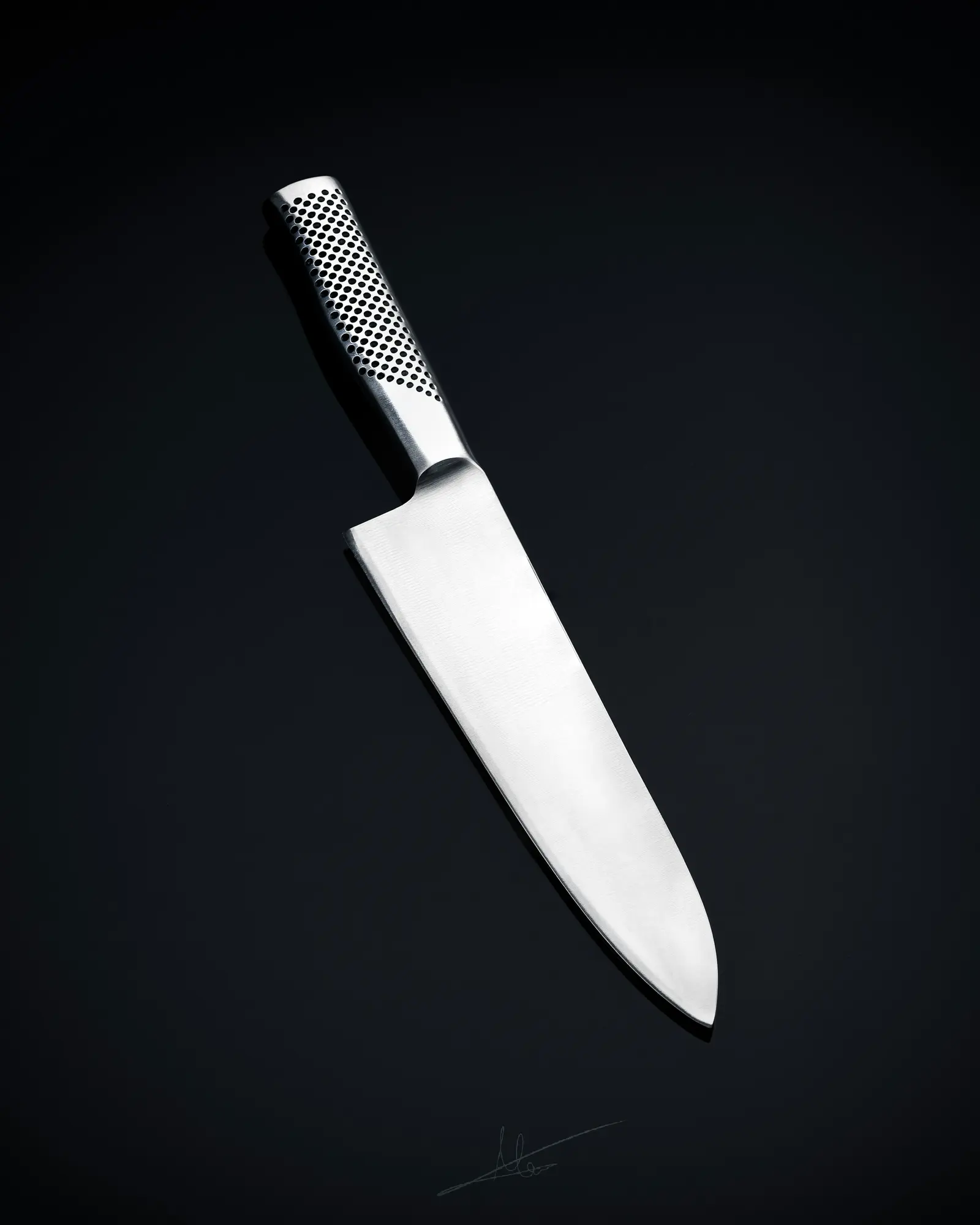
Ask a professional cook what would most improve a home kitchen and the answer is often not a gadget but a sharp knife. Food cuts cleanly instead of being crushed, and a blade that bites into the skin of a tomato does not skid off towards your hand. Keeping a knife in that state is easier than most people think.
Honing and sharpening are different jobs
These two words get used as if they meant the same thing. They do not.
Honing realigns the edge. In use, the very fine edge of a blade gets bent out of line, so it feels dull even though the steel is still there. A honing steel pushes those microscopic teeth back into line, which brings back the bite and prolongs the knife's life1.
Sharpening removes a small amount of steel to create a new edge1. It is what you need when honing no longer brings the knife back, or after an edge has been chipped or rolled badly.
The knife maker Wüsthof recommends a honing steel for regular maintenance and a sharpening tool when the knife needs its edge reset1. Hone every week or two, or every time you cook if you cook a lot, and sharpen rarely.
How to use a honing steel
The safest method for beginners keeps the steel vertical and still:
- Stand the steel upright with its tip resting on a damp cloth or other non-slip surface1.
- Tilt the knife so the angle between the edge and the steel is about 14.5 degrees for a typical Western chef's knife, or about 10 degrees for an Asian-style knife1. If your knife maker gives a different angle, use theirs.
- Hold that angle and draw the blade down the steel from the heel to the tip, pulling the knife towards you as it glides down, so the tip finishes at the bottom of the steel1.
- Repeat on the other side of the steel, alternating sides, six to eight times in total1.
Light pressure is enough. Consistency matters far more than speed. If holding an exact angle feels impossible, think of it as roughly halving a right angle twice, then lowering it a little.
Pull-through sharpeners
Hand-held and electric pull-through sharpeners have guides set at a fixed angle, which makes them a quick, beginner-friendly option1. Wüsthof's instructions for its own hand-held model are a good general guide:
- Place the sharpener on a flat surface and hold it firmly with one hand.
- Insert the blade fully, perpendicular to the counter.
- Pull the knife slowly towards you using only its own weight; pressing down removes too much steel and can damage the edge.
- Always pull from heel to tip, never back and forth.
- Use the fine slot for regular honing, and the coarse slot only once or twice a year1.
Check that a pull-through sharpener is suitable for your knife's angle and steel. A sharpener designed for Western knives can put the wrong angle on a Japanese blade, and serrated knives usually need a special tool.
Whetstones
A whetstone gives the most control and the best edge, and it takes practice. A combination stone has a coarse side that grinds the edge and a fine side that refines it1. Wüsthof's method1:
- Soak the stone in water for about ten minutes (check the instructions; some stones are used dry or with a splash of water only).
- Put it on a flat, non-slip surface with the coarse side up.
- Lay the blade on the stone at about 14.5 degrees and, holding that angle, slide it across the stone from tip to heel.
- Turn the knife over and repeat on the other side.
- Flip the stone to the fine side and repeat.
- Rinse the knife in hot water and dry it immediately.
Keep the stone wet as you work: the fine particles released form an abrasive slurry with the water that does the cutting1. Start with an inexpensive knife until the movement feels natural.
Habits that keep an edge sharp
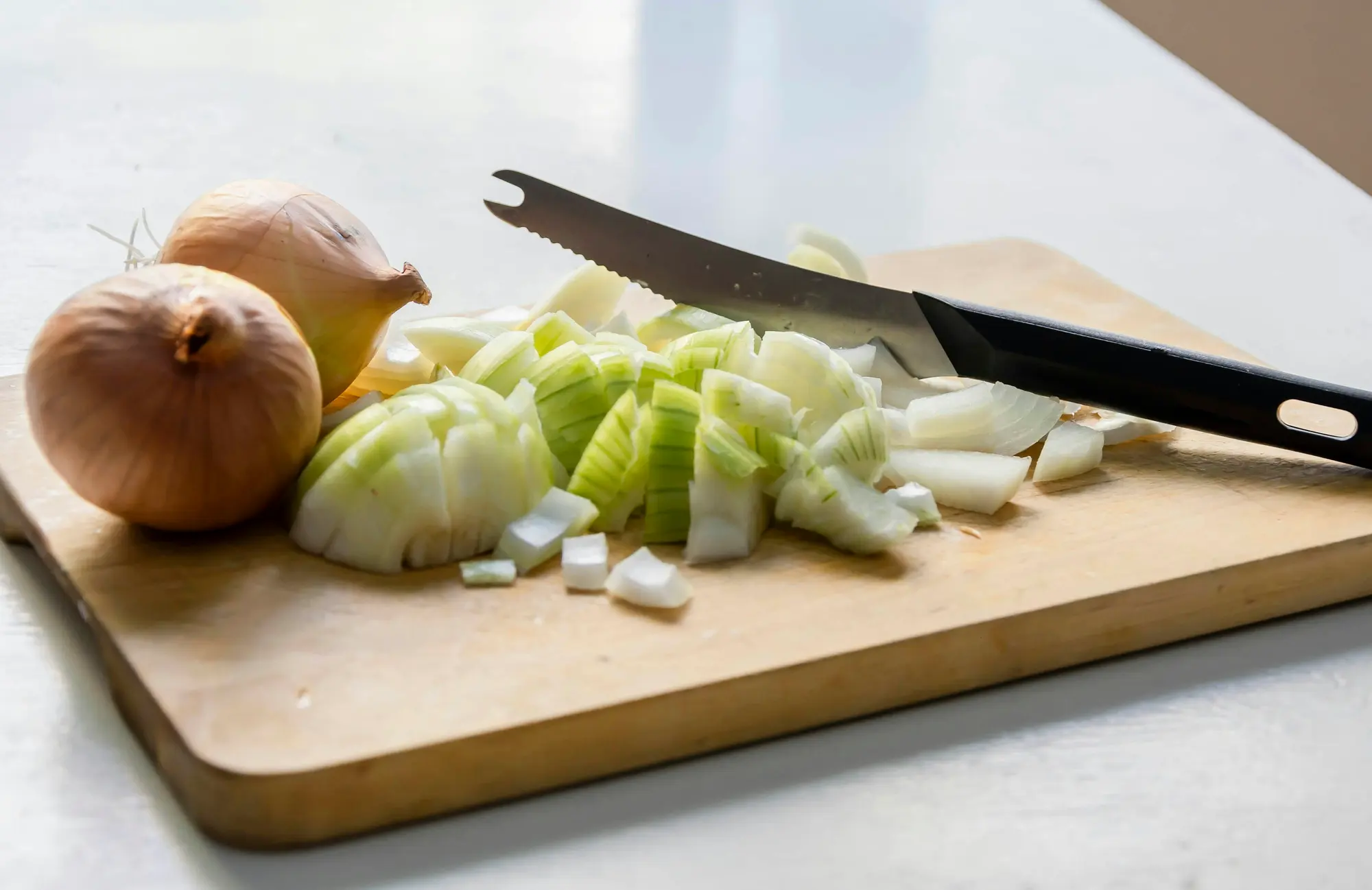
- Cut on the right surface. Wood and plastic are kind to edges, and the USDA considers both acceptable from a food safety point of view2. Glass, marble and ceramic boards blunt knives very quickly. Our guide to choosing a cutting board compares the options.
- Scrape with the spine. Pushing chopped food across the board with the sharp edge bends it. Turn the knife over and use the back.
- Wash by hand and dry at once. Wüsthof also advises washing a knife by hand after honing or sharpening, to remove fine steel particles1.
- Store it so the edge touches nothing. A knife block, a wall magnet or blade guards. A loose knife in a drawer chips its edge and is a hazard for the next person who reaches in.
- Use the right knife. A chef's knife is not for prising lids, cutting frozen food or chopping bones.
Safety while you work
A sharp knife is only safe with good technique:
- Put a damp cloth under the board so it does not slide.
- Make a flat side on round foods first, so they sit still while you cut.
- Curl the fingertips of your guiding hand under, with the knuckles against the side of the blade.
- Never try to catch a falling knife. Step back and let it fall.
- Wash knives separately, not in a sink full of soapy water where you cannot see them.
- After cutting raw meat, poultry or fish, wash the knife and board thoroughly with warm soapy water before they touch anything else3.
How to tell if a knife needs attention
Try slicing a sheet of paper held in the air, or the skin of a ripe tomato. A sharp knife cuts cleanly with almost no pressure. If it tears or skids, hone it. If honing does not help, it is time to sharpen, or to take it to a professional sharpener, which many kitchen shops and markets offer for a small fee.
A good knife, honed often and sharpened rarely, will last decades. That makes it one of the best value tools in the kitchen.
Questions
What is the difference between honing and sharpening?
Honing realigns the microscopic teeth on the edge without removing much metal, so a knife stays sharp for longer. Sharpening removes a small amount of steel to create a new edge. You hone every week or so and sharpen when honing no longer helps.
How often should I sharpen my knives?
With regular honing, usually once or twice a year for home use. Wüsthof suggests using the coarse slot of a pull-through sharpener only once or twice a year, and the fine slot for regular honing.
Can kitchen knives go in the dishwasher?
It is better not to. Knives knock against other items, the detergent and heat are hard on edges and handles, and a loose blade in the cutlery basket is a hazard when unloading. Wash by hand and dry straight away.
Is a blunt knife really more dangerous?
It needs more force and is more likely to slip off the food, especially on round or shiny surfaces like onions, tomatoes and peppers. A sharp knife cuts with less pressure and more control.
Sources
Numbered in the order the article cites them. Opened and read on the date shown.
- How to sharpen your WÜSTHOF knives WÜSTHOF (manufacturer). Read Thursday, 22 October 2026.
- Cutting boards and food safety USDA Food Safety and Inspection Service. Read Thursday, 22 October 2026.
- How to chill, freeze and defrost food safely Food Standards Agency (UK), 2017-12-18. Read Thursday, 22 October 2026.
How we write and check: our method. Spotted an error? Tell the editor.