In short
- Soak the cut wedges in cold water, then dry them thoroughly: less surface starch and less water mean a crisper outside.
- Cook at 180 °C in a single layer and shake halfway; crowded wedges steam instead of crisping.
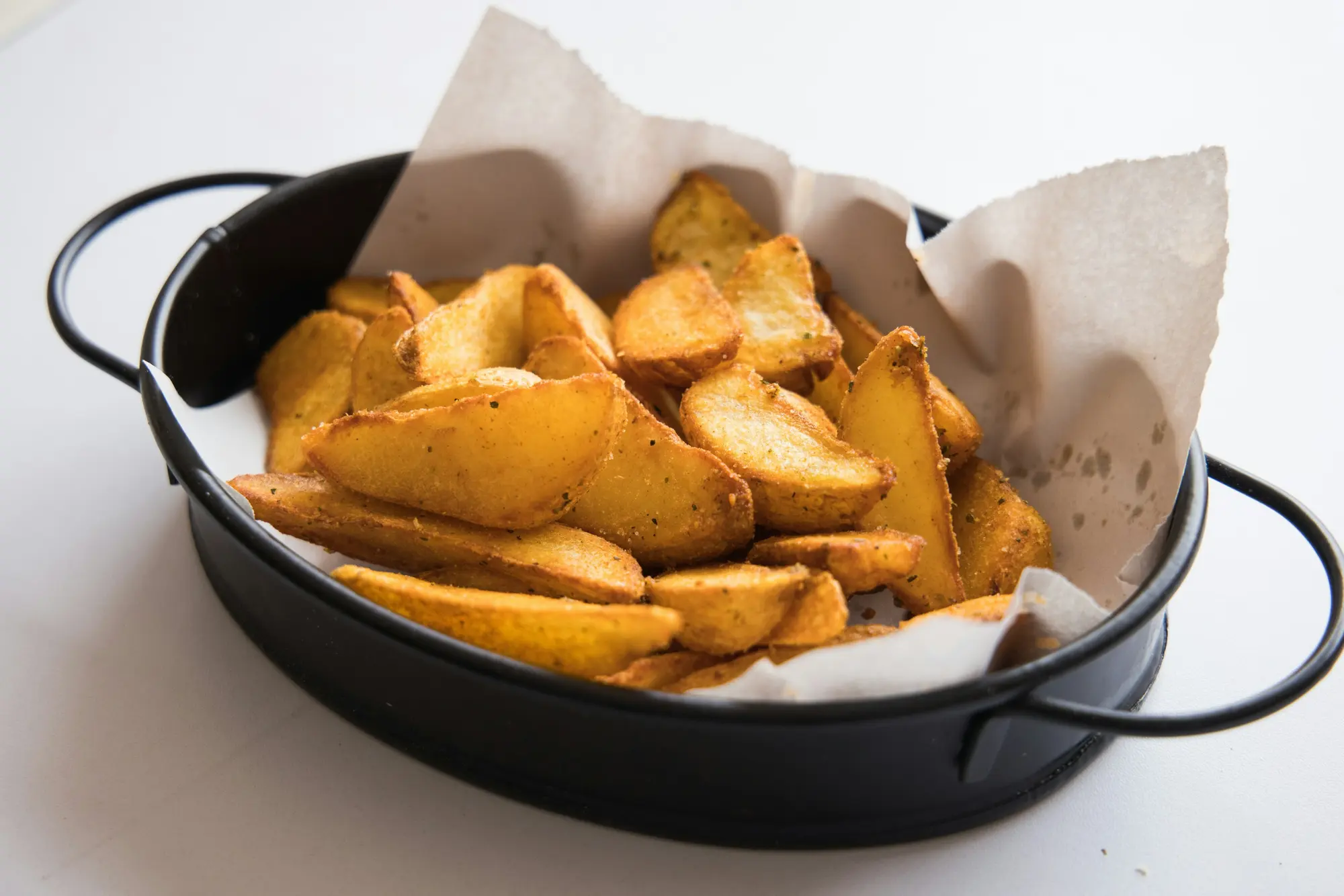
- Stop at golden yellow. Food agencies advise against cooking starchy foods dark brown because browning above 120 °C forms acrylamide.
The recipe
- Makes
- 2 servings as a main side, 3 as a small side
- Prep
- 10 min
- Cook
- 22 min
- Total
- 32 min
Ingredients
- 600 gfloury or all-rounder potatoes, about 3 medium, scrubbed, skins on
- 1 tbspolive oil or rapeseed oil
- 1/2 tspfine salt, plus more to finish
- 1/2 tspsmoked or sweet paprika, optional
- 1/4 tspgarlic powder, optional
- 1 pinchblack pepper
- 1 small handfulparsley or chives, chopped, to serve, optional
Method
- Cut each potato in half lengthways, then cut each half into 3 or 4 wedges about 2 cm thick at the widest point, so they cook evenly.
- Put the wedges in a bowl of cold water for 15 to 30 minutes. Drain and dry them very well with a clean tea towel or kitchen paper.
- Preheat the air fryer to 180 °C for 3 minutes if your model recommends preheating.
- Toss the dry wedges in a bowl with the oil, salt, paprika, garlic powder and pepper until every surface is lightly coated.
- Arrange the wedges in the basket in a single layer, skin side down where possible, with a little space between them. Cook in two batches if they do not fit.
- Cook for 10 minutes, then shake the basket or turn the wedges with tongs.
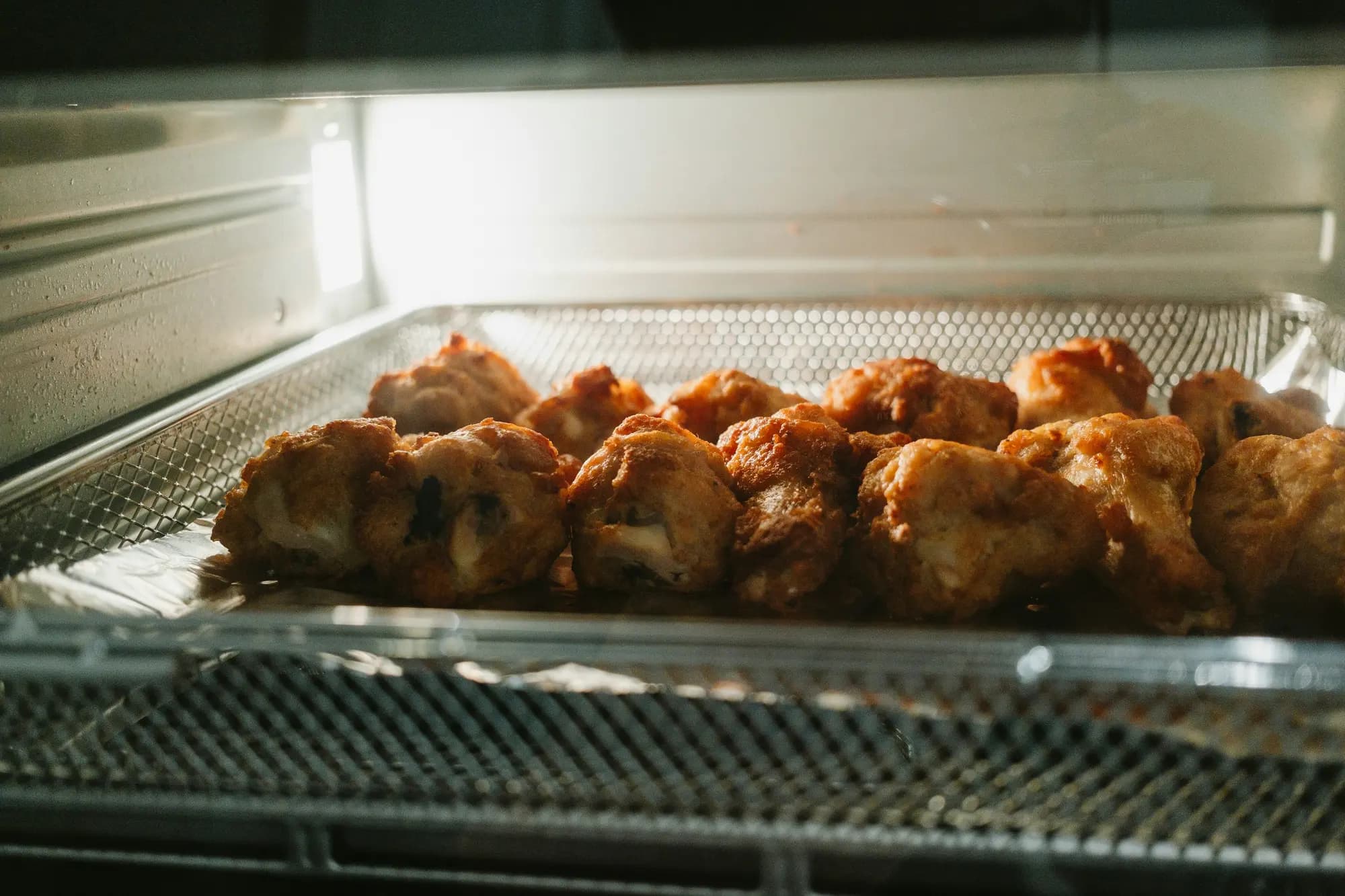
- Cook for another 8 to 12 minutes, checking from 8 minutes, until golden yellow and crisp at the edges and a knife slides easily into the thickest wedge.
- Tip into a bowl, season with a little more salt and scatter over the herbs. Serve straight away.
Done when: Golden yellow, crisp at the edges, and a knife goes into the thickest wedge with no resistance. Stop before they turn dark brown.
A standard home method with the safety temperatures cited below. Times vary with hob, pan and portion: trust the doneness cue.
A wedge is a simple thing: a piece of potato with a crisp, seasoned outside and a soft, fluffy inside. The air fryer is very good at the first part, because hot moving air dries and browns the surface quickly. The method below is built around helping it, and every step has a reason.
Why the soak and the drying matter
Cut potato is covered in loose starch. In the heat, that starch turns gummy before it crisps, and it browns fast. A short soak in cold water rinses most of it off, so the outside crisps more evenly. There is a second benefit: the European Food Safety Authority (EFSA) notes that soaking potato slices in water can reduce acrylamide levels in crisps by up to 40 per cent1.
Drying is just as important. Any water left on the surface has to evaporate before the potato can brown, and while it evaporates it keeps the surface near 100 °C. Wet wedges steam and come out pale and leathery. A tea towel and two minutes of patience make the difference.
Golden, not brown
Acrylamide forms naturally when starchy foods are cooked above 120 °C with little moisture, through the Maillard reaction, the same reaction that gives browned food its colour and flavour1. EFSA concluded that acrylamide in food potentially increases the risk of cancer for consumers of all ages, and fried potato products are among the largest sources of it in our diet1. EFSA also found that, for French fries, temperature raises acrylamide levels more than cooking time, with frying above 175 °C leading to greatly increased levels1.
That is why this recipe cooks at 180 °C rather than the 200 °C many people use, and why the instruction to stop at golden yellow is part of the method rather than a matter of taste. The UK Food Standards Agency's advice for frying, baking, toasting and roasting starchy foods is to aim for a golden yellow colour or lighter2. Golden wedges are also simply better: the dark brown ones taste bitter and dry.
Choosing the potatoes
Floury and all-rounder potatoes give the classic wedge, with a fluffy inside: Maris Piper, King Edward, Russet or Yukon Gold all work. Waxy potatoes, such as small salad varieties, hold their shape well but stay dense in the middle; they are better halved and roasted.
Leave the skins on. They crisp well and save time; just scrub them under the tap.
On storage, advice has changed. The UK Food Standards Agency used to recommend against keeping raw potatoes in the fridge, but now says that a study reviewed by its scientific advisers found home fridge storage does not materially increase acrylamide-forming potential compared with a cool, dark place2. Store them wherever you will use them before they sprout.
Getting the size right
Even wedges cook evenly. Aim for about 2 cm at the thickest edge. Very thin wedges burn at the tips before the rest is done; very fat ones stay hard in the middle. If your potatoes are different sizes, cut the large ones into more wedges so the pieces end up similar.
Do not overfill the basket. A single loose layer, with a little space around each wedge, lets the air reach every side. For four people, cook in two batches and keep the first warm in a low oven, or use the oven method in the questions below.
Variations
- Herb and lemon: skip the paprika; toss the cooked wedges with chopped rosemary or thyme, a little grated lemon zest and flaky salt.
- Spiced: replace the paprika with 1/2 teaspoon of ground cumin and a pinch of chilli flakes.
- Parmesan: after cooking, toss the hot wedges with a tablespoon of finely grated parmesan. Add it at the end; cheese in the basket burns.
- Sweet potato: cut slightly thicker and start checking 3 minutes earlier, as sweet potatoes brown faster.
Serving and leftovers
Wedges are best within minutes of leaving the basket. Serve them with grilled fish, an omelette, a salad or a bowl of soup, with a yoghurt and garlic dip or a spoon of mayonnaise.
Leftovers keep in the fridge, covered, and reheat well in the air fryer at about 170 °C for 3 to 5 minutes, until hot all the way through. If you are new to the appliance, our guide to what to cook in an air fryer has starting temperatures for other foods, and our air fryer buying guide covers sizes and what the basket is made of.
Questions
Which potatoes are best for wedges?
Floury or all-rounder varieties give a fluffy inside: Maris Piper, King Edward, Russet or Yukon Gold, for example. Waxy salad potatoes hold their shape but stay dense inside.
Do I have to soak the potatoes?
No, but it helps. Soaking rinses off surface starch, which makes the outside crisper, and the European Food Safety Authority notes that soaking potato slices in water can reduce acrylamide in crisps by up to 40%.
Can I make these in the oven?
Yes. Spread them on a lined tray in one layer and roast at 200 °C, or 180 °C fan, for about 30 to 40 minutes, turning once. Stop when they are golden.
Can I keep potatoes in the fridge?
The UK Food Standards Agency now says storing raw potatoes in the fridge at home does not materially increase acrylamide compared with a cool, dark cupboard, so either is fine.
Sources
Numbered in the order the article cites them. Opened and read on the date shown.
- Acrylamide European Food Safety Authority (EFSA). Read Thursday, 22 October 2026.
- Acrylamide Food Standards Agency (UK), 2018-01-09. Read Thursday, 22 October 2026.
How we write and check: our method. Spotted an error? Tell the editor.