In short
- Keep a short core list: canned tomatoes, beans and fish; pasta, rice and lentils; stock, oil, vinegar, spices; onions, garlic and potatoes; and a few frozen vegetables.
- High-acid cans such as tomatoes keep their best quality for 12 to 18 months, low-acid cans such as beans for 2 to 5 years, stored cool and dry.
- Throw away cans that bulge, leak, spurt when opened, are deeply dented or badly rusted. Never taste to check.
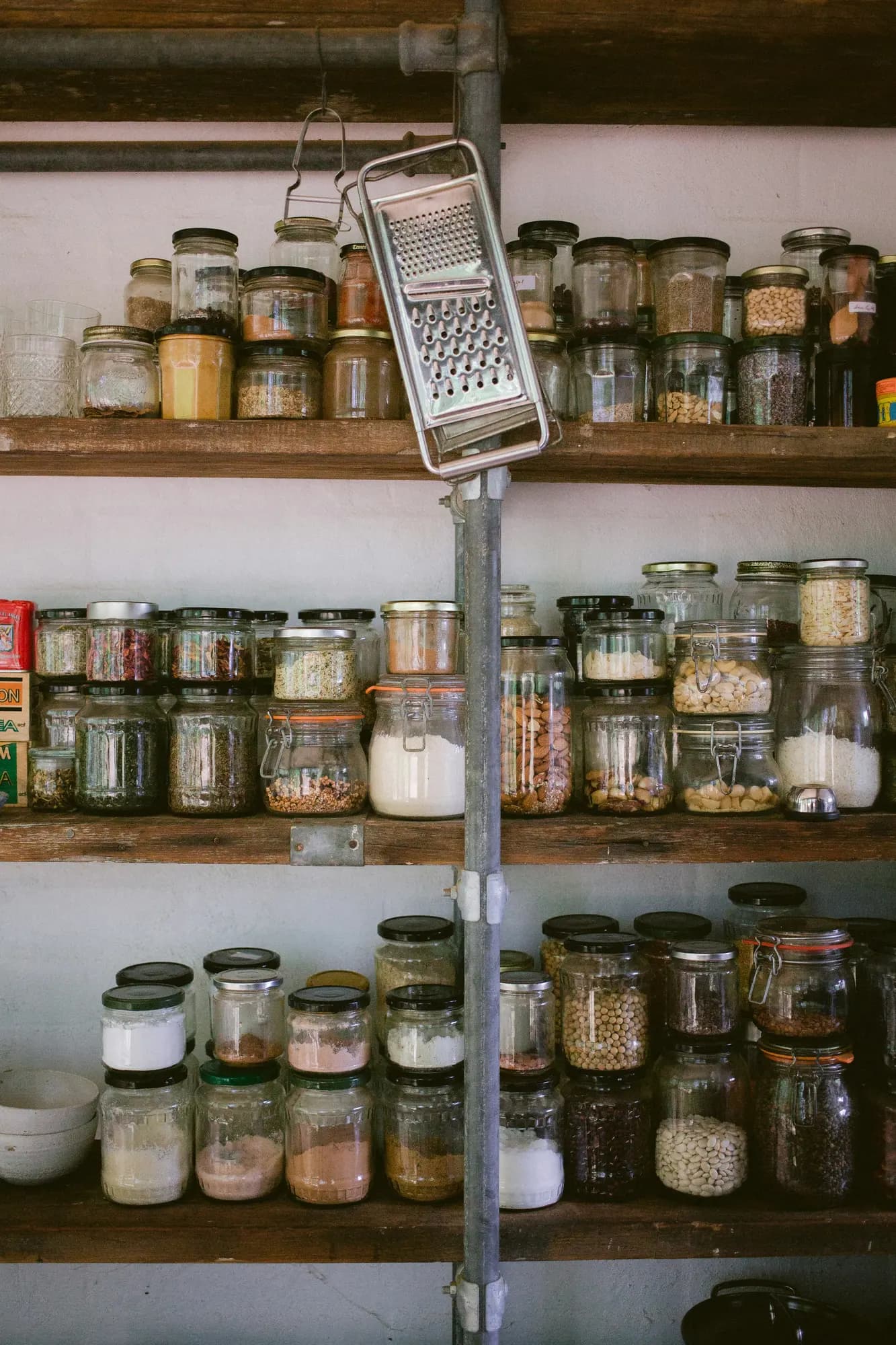
On a busy evening, the difference between cooking and ordering a takeaway is often whether there is something in the cupboard that can become dinner without a trip to the shop. A weeknight pantry solves that. It is not about buying in bulk; it is about keeping a small set of long-lasting ingredients that work together, and knowing how to store them.
The core list
You do not need all of this. Start with what you already cook, and fill the gaps.
Cans and jars
- Chopped or whole tomatoes, and a tube or jar of tomato purée
- Chickpeas, butter beans, cannellini or black beans
- Tuna, sardines or salmon
- Coconut milk
- Stock cubes, bouillon powder or concentrate
- Olives, capers, roasted peppers, a jar of pesto or curry paste
Dry goods
- Pasta in one long and one short shape
- Rice (long-grain or basmati) and a quick grain such as couscous or bulgur
- Red lentils, which cook in 15 minutes with no soaking
- Oats, plain flour, a bag of breadcrumbs
Flavour
- Olive oil and a neutral oil, red or white wine vinegar, soy sauce
- Dried chilli flakes, ground cumin, smoked paprika, dried oregano, black pepper, salt
- Mustard, honey or sugar, a squeeze tube of garlic or ginger if you like
Fresh but long-lasting
- Onions, garlic, potatoes, carrots, lemons
Freezer
- Peas, spinach and sweetcorn, a loaf of sliced bread, some grated cheese
How long cans really keep
Canned food is safe for a long time because it has been heated in a sealed container, but quality slowly declines. The US Department of Agriculture gives two useful rules of thumb for unopened cans1:
| Type of can | Examples | Best quality, unopened | After opening, in the fridge |
|---|---|---|---|
| High-acid | Tomatoes, fruit, fruit juice, pickles, sauerkraut | 12 to 18 months | 5 to 7 days |
| Low-acid | Beans, vegetables, soups (except tomato), meat, fish, stews | 2 to 5 years | 3 to 4 days |
The difference comes from the food reacting with its container. In high-acid foods like tomatoes, natural chemicals in the food keep reacting with the can, and over several years this changes taste and texture and eventually lowers nutritional value1.
Storage matters as much as time. Keep cans and dry goods in a cool, dry place, below about 29 °C (85 °F), and not above or beside the cooker, under the sink, or in a damp garage or cellar1. Check the cupboard every few weeks and move older items to the front.
Once a can is open, empty what you do not use into a bowl or container and put it in the fridge. The UK Food Standards Agency explains that, once exposed to air, tin from the can can transfer more quickly to the food inside; cans with resealable lids such as cocoa or golden syrup are the exception2.
When a can goes in the bin
Most cans are fine. A few are not, and the rules are clear.
- Bulging, leaking or spurting. A can that bulges, or spurts forcefully when opened, may contain gas from microorganisms that can spoil the food and make it unsafe2. Bulging, leaking or badly dented cans are also warning signs for botulism, which is rare but serious1. Do not taste it; throw it away.
- Deep dents. A small dent in an otherwise sound can is fine. A deep dent, one you can lay a finger in, or a sharp dent on the top or side seam can damage the seal; discard it1.
- Heavy rust. Surface rust that wipes off with a paper towel is not serious, but heavily rusted cans can have tiny holes that let bacteria in1.
- Accidentally frozen cans that have swollen, or that thawed and refroze, are not safe1.
A gentle hiss when you open a vacuum-packed can is normal. A loud hiss or contents shooting out is not1.
Best before versus use by
These two dates mean different things. The Food Standards Agency explains that the best before date is about quality, not safety: food is safe after it but may not be at its best2. Vegetables past their best before date may be wrinkly or soft but are safe to eat as long as there is no visible decay2.
A use by date is about safety, and it appears on chilled, perishable food. Keep those foods in the fridge, between 0 and 5 °C3, and use or freeze them by the date. You can freeze food right up until midnight on its use by date3.
Onions, garlic and potatoes
Store onions, garlic and potatoes somewhere cool, dark and dry, and apart from each other if you can. On potatoes, the Food Standards Agency now says either the fridge or a cool, dark, dry place is fine2. Remove any sprouts, and cut off green or damaged parts before cooking: those can contain higher levels of natural toxins called glycoalkaloids, although poisoning from them is extremely rare2.
Five dinners straight from the cupboard
- Pasta puttanesca: garlic, chilli, olives, capers and canned tomatoes, simmered while the pasta cooks; tuna stirred through if you like.
- Red lentil soup: onion, carrot, cumin, red lentils and stock, simmered for 20 minutes and blended.
- Chickpea and tomato stew: onion, garlic, smoked paprika, chickpeas, tomatoes and frozen spinach, with bread or rice.
- Fried rice: cold cooked rice, frozen peas and sweetcorn, eggs and soy sauce, in a hot pan.
- Tuna and white bean salad: beans, tuna, red onion, lemon, olive oil and whatever herbs are around.
Keeping it working
The pantry only helps if it is used. When you open the last of something, write it on the shopping list straight away. Put new purchases at the back and older ones at the front. Once a month, glance at the dates and plan a meal around whatever is oldest. A cupboard that turns over steadily is cheaper, wastes less, and always has dinner in it.
Questions
Is it safe to eat canned food after the best before date?
Best before is about quality, not safety. The UK Food Standards Agency says food is safe after it but may not be at its best, and that how long depends on the product, the storage and the brand. Use by dates are different: do not eat food after its use by date.
Can I keep an opened can in the fridge?
Empty it into a bowl or container first. The Food Standards Agency advises against storing food in an opened tin, because tin from the can can transfer more quickly to the food once it is exposed to air.
Is a dented can safe?
A small, shallow dent in an otherwise good can is fine. A deep dent you can lay your finger in, a sharp dent on a seam, or a dent with rust means the can should be thrown away.
Are canned beans safe without cooking?
Yes. Canned beans have already been soaked and boiled. It is raw or undercooked dried beans, especially red kidney beans, that carry a natural toxin and must be boiled properly.
Sources
Numbered in the order the article cites them. Opened and read on the date shown.
- Shelf-stable food safety USDA Food Safety and Inspection Service. Read Thursday, 22 October 2026.
- Home food fact checker Food Standards Agency (UK), 2026-08-21. Read Thursday, 22 October 2026.
- How to chill, freeze and defrost food safely Food Standards Agency (UK), 2017-12-18. Read Thursday, 22 October 2026.
How we write and check: our method. Spotted an error? Tell the editor.